
Choosing the Right Luxury Home Builder in the San Juan Mountains
The San Juan Mountains attract a specific type of homeowner: someone who has already decided to invest in mountain living and now faces a choice about how to make the most of the lifestyle. Do you want a sprawling ranch home with acreage and views? A timber-frame cabin that feels rooted in the landscape? A chalet-style property steps from the slopes? Your choice shapes everything about how you’ll live here.
The challenge, and one reason it is important to clarify your vision, is that most builders tend to specialize. A contractor comfortable framing conventionally built ranch homes may never have worked with exposed timber systems. A log cabin specialist might lack awareness of how to navigate permitting for high-altitude ski-access properties. The timelines, budgets, and design approaches for each type of home are significantly different.
This article walks through what to expect when building a luxury home in the Durango area and how to identify a builder who understands the specific demands of the home type you want.
Understanding the Three Core Luxury Home Types in the San Juans
Before you interview builders, it helps to understand what each home type requires.
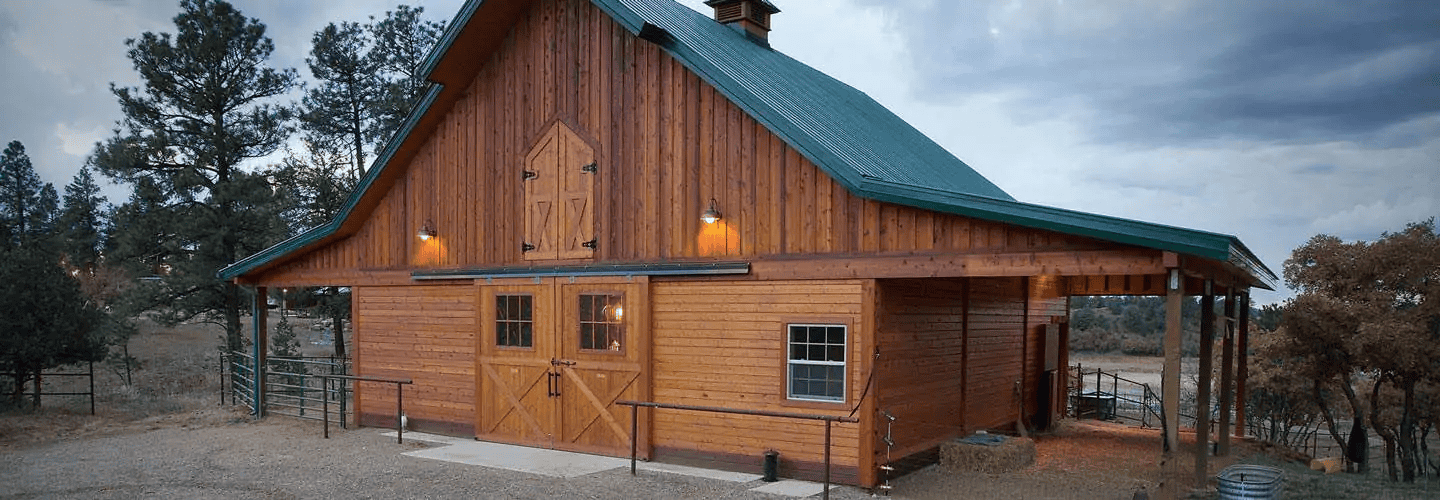
- Ranch homes offer uncompromised flexibility on acreage. You’re not constrained by steep slopes, avalanche paths, or neighbors. You can orient the home for optimal solar gain, design multiple outdoor spaces, and add equestrian facilities or workshops. Ranch properties in the San Juans appreciate steadily and offer the easiest winter access, typically at lower elevations with room for reliable driveways.
- Luxury Log cabins deliver aesthetic authenticity that no other construction method can match. The exposed timber of a luxury log cabin design feels genuinely rooted in the landscape. A properly constructed log cabin lasts 100+ years. And because logs are the primary visual element, you can design dramatically open floor plans with vaulted ceilings and minimal interior walls while maintaining rustic character.
- Ski-in/ski-out homes offer a lifestyle that transforms how you use the mountains. There’s no friction between deciding to ski and being on the slope. These properties command premium pricing and hold value through market cycles. Summer brings wildflower meadows and high-altitude trail access; fall offers quaking aspens and solitude. For owners committed to immersive mountain living, ski-access properties deliver something unparalleled.
All three possibilities require builders who think beyond construction and into designing your life. A ranch home that doesn’t capture morning light fails its owners daily. A log cabin that settles unevenly becomes a maintenance nightmare. A ski-access home with poor snow management and drainage turns into a structural liability. Fortunately, the team at Agave has a track record of building all three home types and is an expert across multiple categories.
Building a Luxury Ranch Home
Luxury ranch homes in the San Juan Mountains often sit on 5 to 20+ acres. This acreage is both a draw and a challenge. It gives the team space to design freely, but it also means you need someone who understands how terrain, solar orientation, and wind patterns affect livability.
The best ranch builders start with an effective site analysis. Beyond just deciding “we’ll put the house here,” this involves a detailed assessment of where the sun hits the property at different times of year, where winter winds come from, which views warrant framing with windows versus which views are background texture. They understand passive solar principles and know that a south-facing wall gains heat in winter but needs proper overhangs to shade it in summer.
As you speak with builders, ask about their portfolio with large acreage properties. Have they built on exposed sites where wind is a factor? Do they have experience with long driveways and the infrastructure required for 5+ acres? Can they speak to septic system design, well placement, and how to handle grading on sloped land without creating drainage issues?
Also, ask about their approach to scale and proportion. A 3,000-square-foot ranch home needs to feel intentional on a 10-acre lot, not swallowed by the landscape. Similarly, a 6,000-square-foot ranch that dominates its site will feel out of place regardless of architectural quality. The ability to integrate beautifully into the great outdoors is the true potential of the ranch home. The best builders have a philosophy about how homes relate to their land.
The Allure of the Luxury Log Cabin
Log cabins call for a unique skill set in builders. Log cabin builders in Colorado need to understand how timber responds to seasonal moisture, how joinery holds up under differential settling, and what happens to chinking when logs shift.
If this style appeals to you, ask your prospective builder directly about their expertise with log construction. How many log homes have they completed? What timber species do they prefer and why? Do they work with timber framers on-site, or do they source pre-cut systems? Each approach has trade-offs: on-site timber framing allows for customization but requires precise coordination; pre-cut systems offer consistency but less flexibility for site-specific adjustments.
Equally important: ask about settling and maintenance. Every log home settles. The question is whether the builder has designed the home to settle predictably and with minimal impact on mechanical systems, or whether settling will be an ongoing headache involving chinking repairs, window and door adjustments, and potential moisture infiltration. Also inquire about finishes and durability. Log homes in the San Juans face sun exposure and seasonal moisture swings. What stains and sealers do they specify? How often will exterior maintenance be needed? A trustworthy builder will discuss this proactively.
How To Assess a Ski-In/Ski-Out Home Builder
Ski-access properties operate under different physics. Snow accumulation, avalanche risk, winter accessibility, and meltwater aren’t theoretical concerns. They’re daily realities that demand builders with specific expertise.
Ask about a builder’s experience with steep-slope construction. Foundations on slopes need different engineering than flat-land homes. Have they worked with engineered footings and retaining walls? Have they worked with geotechnical engineers to assess soil stability?
Also, ask about snow management and drainage. A ski-in/ski-out home needs designed roof lines that manage heavy snow loads, gutters and downspouts that handle melt, and grading that directs water away from the foundation rather than pooling against it. Ask to see how they’ve handled this on past projects. Further, if the property sits in or near an avalanche path, have they worked with an avalanche consultant? Have they designed protection structures if needed? A builder working on high-altitude properties should be aware of avalanche considerations.
The Question That Matters Most: “Walk Me Through Your Last Three Projects”
Regardless of which home type you favor, ask a builder to walk you through three recent projects in detail. Take the opportunity to dig into the timeline, any challenges encountered, and how they resolved them.
Did they stay on schedule, or did weather, permitting, or supply chain issues cause delays? How did they handle those delays with clients? Were changes managed proactively, or did they become sources of conflict? When unexpected site conditions emerged (rock, poor soil, existing foundation issues in a remodel), how did they respond? Did they propose solutions and manage costs, or did they hand problems back to the client?
Listen for specificity. A builder who can describe actual challenges and solutions is more credible than one who presents a perfect narrative. You want to hear about the time the excavator hit an underground spring, or when the snow load in March was heavier than anticipated, or when a timber delivery arrived damaged and they had to source replacements quickly. These stories reveal problem-solving ability and realistic thinking.
Ask about communication and decision-making during construction. Did the client feel informed and involved, or blindsided by issues? Were change orders explained in advance or presented as surprises? A builder’s approach to communication during the build predicts your relationship during the build.
Why Expertise in San Juan Mountain Building is Vital
The San Juan Mountains aren’t a generic environment. The elevation, typically 7,500 to 10,000+ feet, changes everything: snow loads, solar intensity, temperature swings, soil composition, and avalanche risk. The permitting environment is unique. A builder with 20 years of history in the Colorado Front Range mountains might be competent in conventional construction but out of their depth in the San Juans.
Look specifically for builders with deep roots in this region. How many projects have they completed specifically in the San Juans? Do they have established relationships with local subcontractors? Have they worked with the La Plata County permitting office and the geotechnical engineers who understand local soil conditions?
At Agave, our expertise spans all three home types: luxury custom ranch homes, luxury log cabins and timber-frame properties, and high-altitude ski-in ski-out access residences. We’ve completed projects across the San Juan region, from valley floors near Durango to ridge properties. We understand the technical demands of each home type and the specific challenges of building in this landscape.
Ultimately, choosing a luxury home builder in the San Juan Mountains comes down to three things: expertise specific to your home type and the region, a transparent approach to budget and timeline, and a track record of completed projects.
Building in the Durango area is a commitment worth getting right. If you’re ready to turn your vision into reality, the team at Agave is here to guide you through every step. We know this landscape, we know what works, and we love helping homeowners build homes they’ll treasure for decades. Get in touch; let’s talk about your dream mountain home.
When the International Energy Conservation Code was updated in 2024, Colorado adopted it, and La Plata County soon began enforcing it.…
Building a custom home in Durango is a commitment to an unbeatable landscape. It means choosing mountain life and valuing intention over speed.…