
Choosing the Right Luxury Home Builder in the San Juan Mountains
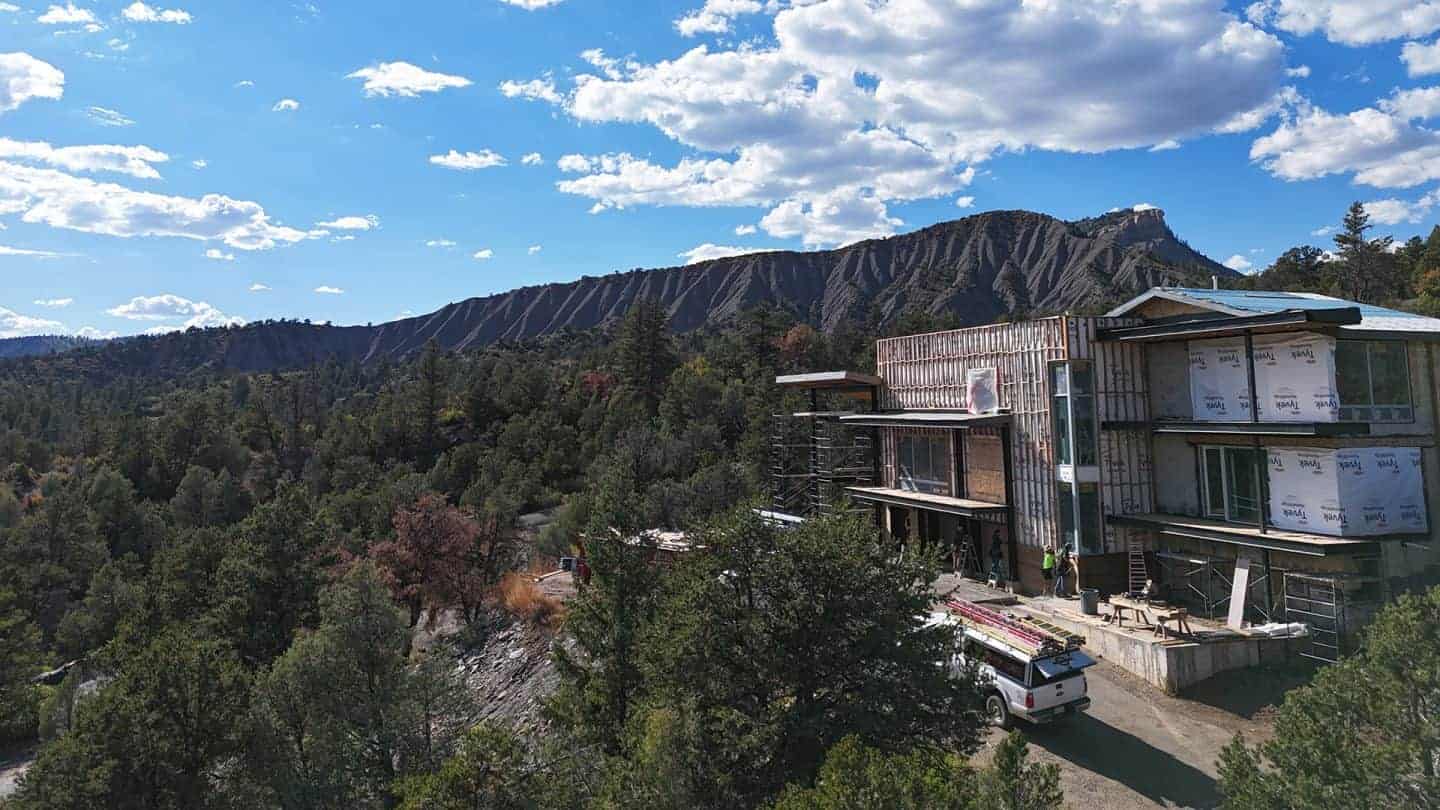
When the International Energy Conservation Code was updated in 2024, Colorado adopted it, and La Plata County soon began enforcing it. If you’re planning to build or significantly remodel a home in the San Juan Mountains, this shift represents both a meaningful challenge and an opportunity. Trust us, this code is quickly revealing which Durango home builders have been thinking carefully about the future and which are just now catching up.
This isn’t meant to alarm you. Rather, it’s an invitation to understand what’s happening and why choosing the right design team matters more now than ever before. The code is more complex than previous versions, and the implications for mountain living are substantial. But complexity also reveals clarity: the builders who have invested in understanding this landscape are the ones who will guide your project smoothly from vision to completion. Fortunately, our team at Agave is well ahead of the curve.
What’s New: The 2024 IECC Basics
The 2024 International Energy Conservation Code establishes minimum energy-efficiency standards for all new construction and major renovations. This means every new luxury home and significant remodel in Durango must now meet more rigorous standards for insulation, heating and cooling efficiency, air sealing, and electrical readiness for the future.
These aren’t marginal adjustments. Wall insulation requirements have increased, as have ceiling insulation requirements. Ductwork must be sealed and tested to performance standards. And all of this is now verified through field testing, not simply signed off based on plans.
What makes the code elegant is its flexibility. You’re not required to install solar panels immediately or buy the most expensive equipment. Instead, the code uses a performance point system. You can achieve the required efficiency through superior insulation, premium windows, highly efficient HVAC equipment, solar readiness, electric-ready infrastructure, or a thoughtful combination of these approaches. The code gives you options in how you meet the standard, while ensuring that you do indeed meet it.
This flexibility creates both opportunity and complexity. That complexity is where the right builder will make all the difference.
Colorado’s Vision: Electric-Ready and Solar-Ready Homes
Colorado took the 2024 IECC foundation and added to it. Under state law, any Colorado jurisdiction enforcing the new code must also adopt the Colorado Model Electric Ready and Solar Ready Code. For La Plata County homeowners, this means that your new home is designed not just for now, but for the energy future you might choose tomorrow.
The requirement asks that every new home be pre-wired and pre-positioned for solar panel installation, EV charging capability, and the infrastructure needed to someday upgrade any fuel-gas appliance, such as your furnace, water heater, range, or dryer, to electric alternatives.
On paper, this sounds straightforward. In practice, in a mountain community built on aging infrastructure, thoughtful design and experienced builders become essential.
The La Plata County Reality: Where Vision Meets Infrastructure
When we break it down, the solar and EV readiness requirements are manageable. They involve running extra conduit and leaving room in your electrical system for future additions. The electric-appliance readiness requirement, though, is where the code’s vision encounters the reality of how our community’s electrical grid was built. Understanding this challenge is crucial if you’re planning a luxury home or significant remodel in Durango.
Here’s the situation: if a home is to be capable of eventually running an electric furnace, the code requires that the electrical service capacity be available at the time the home receives its certificate of occupancy. This means running wiring and service capacity to an electrical panel that would support a high-efficiency heat pump or electric resistance heating system.
For a modest 3,000-5000-square-foot home in the San Juans, this means 400-600 amps of service capacity, respectively. To give you context, homes built a decade ago might operate on 200 amps. The difference isn’t simply a matter of upgrading your panel; it’s a complete service overhaul, which comes with substantial investment.
In Durango, much of our community’s most cherished real estate is in the Triangle neighborhoods with their walkability and character, and downtown with its proximity to the Animas River. These neighborhoods were built on electrical infrastructure designed for another era. Many utility connection points in these beloved areas will struggle to deliver 400 amps.
We share this because we want our valued community to be informed that while they might love the Triangle and want to buy and remodel a home there, they might discover at the permitting stage that the code requires electrical capacity beyond what the utility can provide. The code requires it; the infrastructure can’t support it. The project will face a complicated constraint.
This is a real challenge that most contractors and architects haven’t fully encountered yet. But it’s coming, and when it does, the builders who have already thought through solutions, who understand the sequencing, know how to work with utilities, and can find creative approaches, will be the strongest partners.
The Point System: Designing Efficiently Within New Requirements
The 2024 IECC uses a point-based system for compliance that gives your design team some legroom. A project earns points by meeting various efficiency criteria, such as insulation levels, window U-values, HVAC efficiency ratings, all-electric home design, solar readiness, and EV charging capability.
For homes under 5,000 square feet, you need to earn points from at least two categories. For larger homes, you need points from at least three. The logic of this system is that it rewards smart design choices rather than mandating a single approach.
You could, for example, specify exceptional windows and doors, accept a more modest HVAC efficiency rating, and still comply. Alternatively, you could design a home to run entirely on electricity, which is worth substantial points and gives you more flexibility in insulation levels. Or you could invest in a high-efficiency heat pump and solar readiness, achieving the points through mechanical options rather than envelope upgrades.
An experienced builder can help you navigate to the approach that makes the most sense for your specific property, climate zone, long-term vision, and budget. The points system is not one-size-fits-all, which means you will need a thoughtful partner in decision-making.
The Snow Load Calculation: A Mountain-Specific Change
Here’s another important shift that affects every mountain property. Snow loads, the structural load your roof needs to be engineered to support, used to be calculated by your local building official. The Authority Having Jurisdiction would review historical snow data and local conditions and determine what your specific property needed. Under the 2024 code, snow loads are now calculated using the American Association of Cost Engineers database, which uses the highest elevation point within a half-mile radius of your property.
Think about what that means in the San Juan Mountains. If your home sits at 7,500 feet, but there’s a peak at 10,500 feet within a half mile, the code calculates your snow load based on the peak. This affects your roof framing design, your engineering requirements, and your construction costs. It’s a real consideration. And it’s something your builder should anticipate and explain during the design phase, not surprise you with later.
Expertise and Foresight Make All the Difference
In a sense, the 2024 IECC makes every builder a green builder. If you’re pulling permits under the new code, you will meet excellent energy efficiency standards regardless of whether going green is your priority. The era of builders differentiating themselves primarily through “green” or “sustainable” labels has shifted. Compliance is now the baseline for everyone.
At Agave, we’ve been wiring homes for EV charging and future solar capability for years. Even on projects where clients weren’t ready to install solar panels initially, we designed the home’s infrastructure from the beginning. We weren’t following a mandate. We were building from our understanding of where energy technology and building science were headed. We were thinking about our clients’ futures.
When the code changed, we didn’t scramble to catch up. We shifted our approach slightly, but the underlying philosophy was already in place. We had already invested in understanding how electrical loads work in our community and had already built relationships with our utility providers. We had already mapped how to design beautiful homes that could accommodate the infrastructure needs of tomorrow.
This is the difference between a builder who can tell you what the code requires and a builder who has been preparing your home for these realities all along.
What to Look For When Choosing Your Builder
If you’re planning a luxury home or significant remodel in the San Juan Mountains, there are questions worth asking any potential design team. Have they built under the 2024 IECC yet? What was their experience navigating the new permitting landscape? Ask them about the electrical service requirements – do they understand the 400-amp and 600-amp thresholds? Have they had direct conversations with our local utility provider about what’s possible at your specific location? Do they know how to design creatively around infrastructure constraints? Ask about their approach to the point system. Do they have a strategy for helping you achieve compliance efficiently, balancing cost, performance, and your specific priorities?
The best builders respond with specificity, with stories from real projects and a clear sense that they’ve thought through these challenges before. They should make you feel like you’re in the hands of someone who has already solved the puzzles you’re about to face.
At Agave, we’ve spent months investing in understanding this code, showing up to community meetings, and getting ahead of its implications for our community so we can guide our clients through it with confidence and care. We’ve attended the city’s code introductions. We’ve mapped the point system. We’ve built relationships with the utilities and engineers who will be part of your project.
Our clients trust us because we think ahead. They know we’re not just building homes to meet today’s standards; we’re building homes that will serve them beautifully for decades, adapted to the community we all care about and positioned for the future they might choose.
If you’re ready to explore building or remodeling a luxury home in the San Juan Mountains, we’d welcome the opportunity to discuss it. Visit our custom San Juan Mountains homes page to see the homes we’ve built and check out our FAQs to learn more about how we work with clients through every phase of the process. We’re here to guide you through this landscape, not just the code requirements, but the deeper work of creating a home that fits your vision and serves your family. Let’s talk about what’s possible for you.
The San Juan Mountains attract a specific type of homeowner: someone who has already decided to invest in mountain living and now faces a choice…
Building a custom home in Durango is a commitment to an unbeatable landscape. It means choosing mountain life and valuing intention over speed.…